If you hold ETH in your Ledger wallet, you can now put it to work, securely and natively, through a direct integration with P2P.org, one of Ethereum’s most trusted validator operators.
This guide will walk you through how to stake ETH inside Ledger Live using the P2P.org validator.
No third-party platforms. No custodians.
Just a clean, on-chain staking flow directly from your hardware wallet.
Why Stake ETH with P2P.org via Ledger?
P2P.org is one of the most experienced staking providers on Ethereum. With 7+ years of track record, zero slashing events, and consistently high validator performance, P2P.org delivers institutional-grade infrastructure trusted by top protocols and wallet providers worldwide.
Now, all of that is available inside Ledger Live, without giving up custody or control.
What You’ll Need
A Ledger hardware wallet (Nano S, X, etc.)
The Ledger Live desktop app (latest version)
ETH in your wallet
Just a few minutes of your time
Step-by-Step Guide
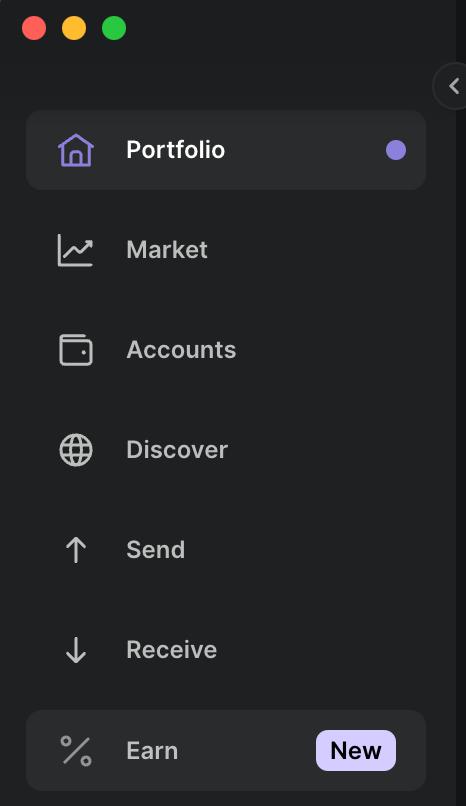
1. Open Ledger Live → Go to “Earn”
Open the Ledger Live app and connect your Ledger device. From the main menu, tap “Earn” to explore staking options available directly in-app.
Start by opening the Earn section in Ledger Live.
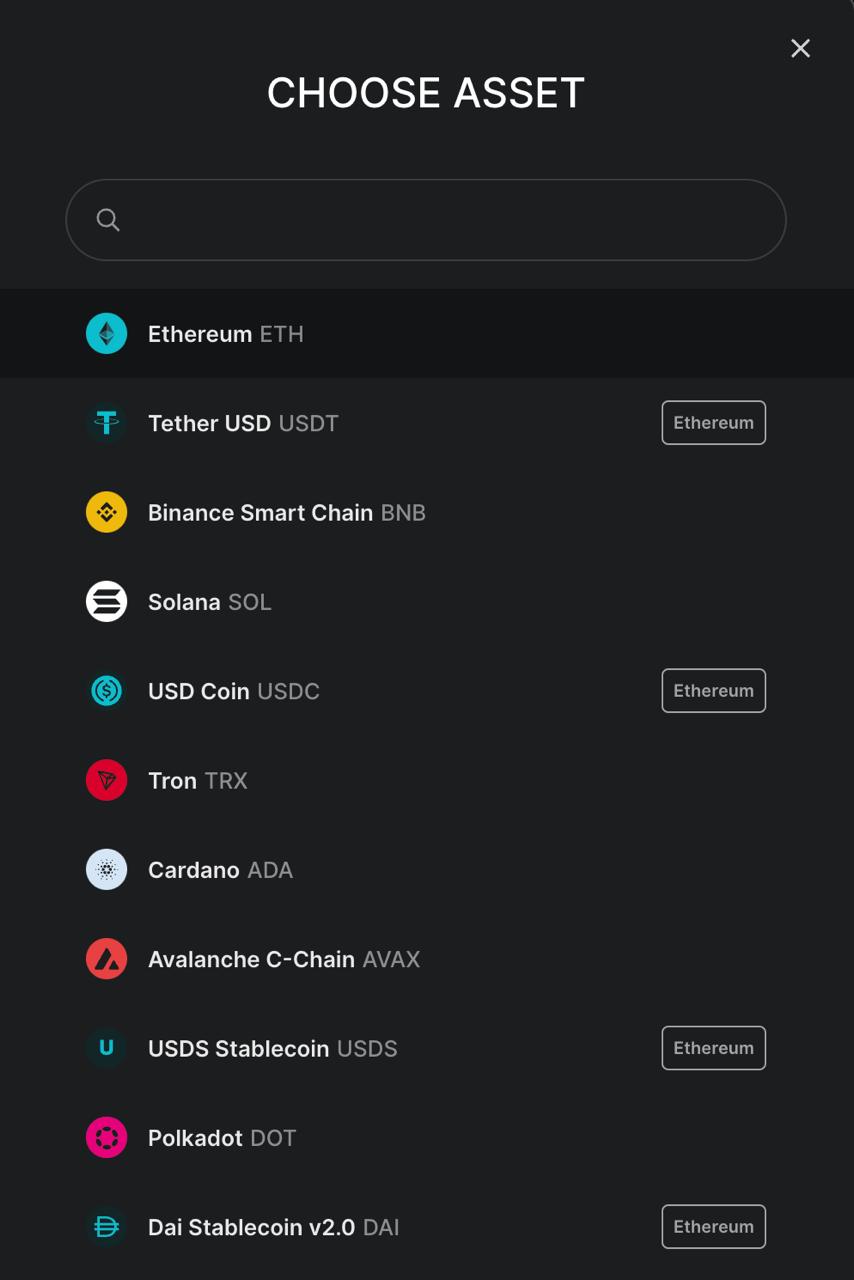
2. Choose Ethereum as the asset
In the Earn section, scroll down and choose Ethereum (ETH). You’ll be staking ETH directly to a validator on the Ethereum network.
Choose Ethereum inside Earn.
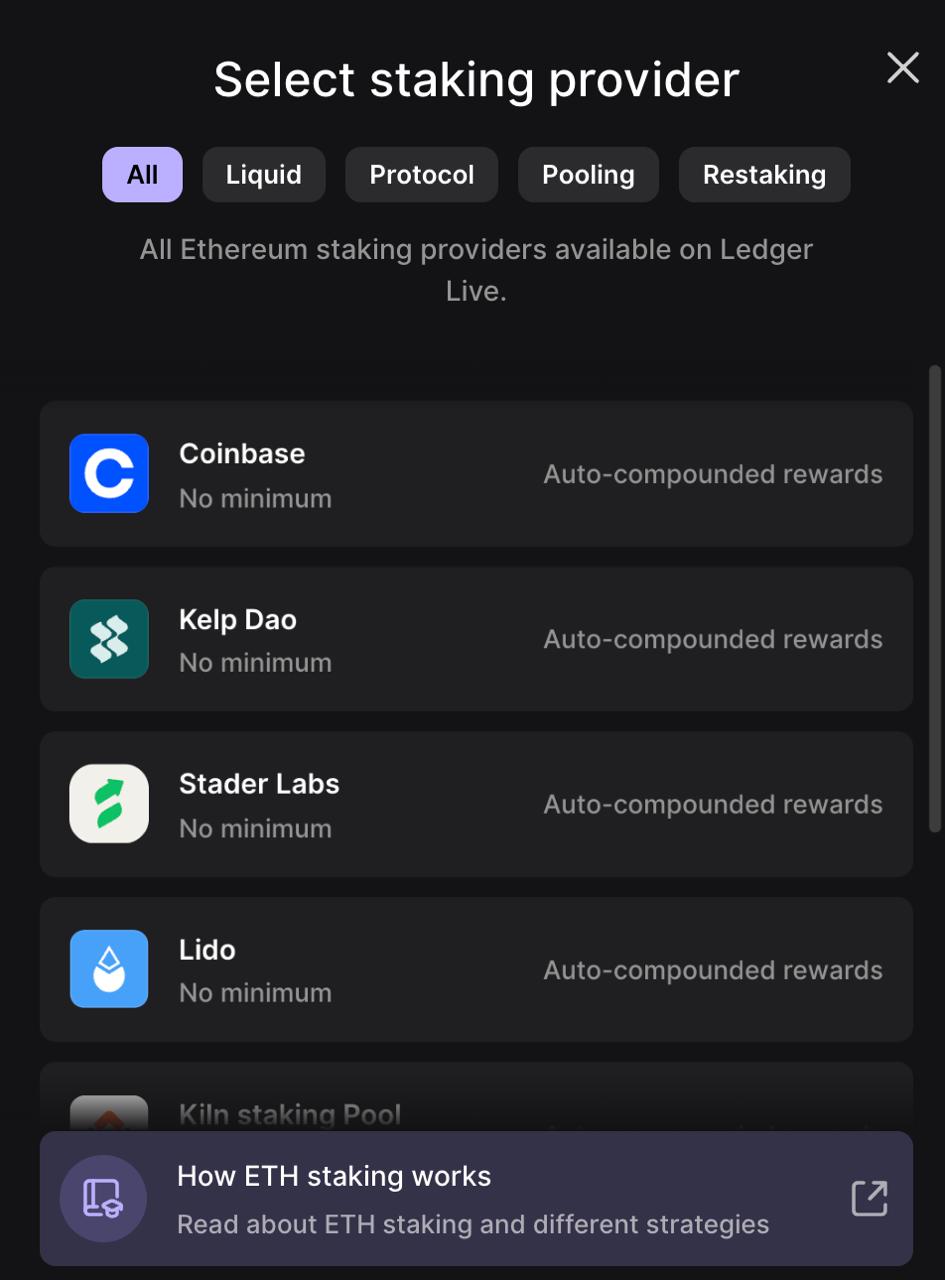
3. Select the P2P.org as the staking provider
You’ll see a list of validator options. Select P2P.org from the list to stake with one of Ethereum’s most secure, high-performing validator operators.
Choose P2P.org inside the staking providers options.
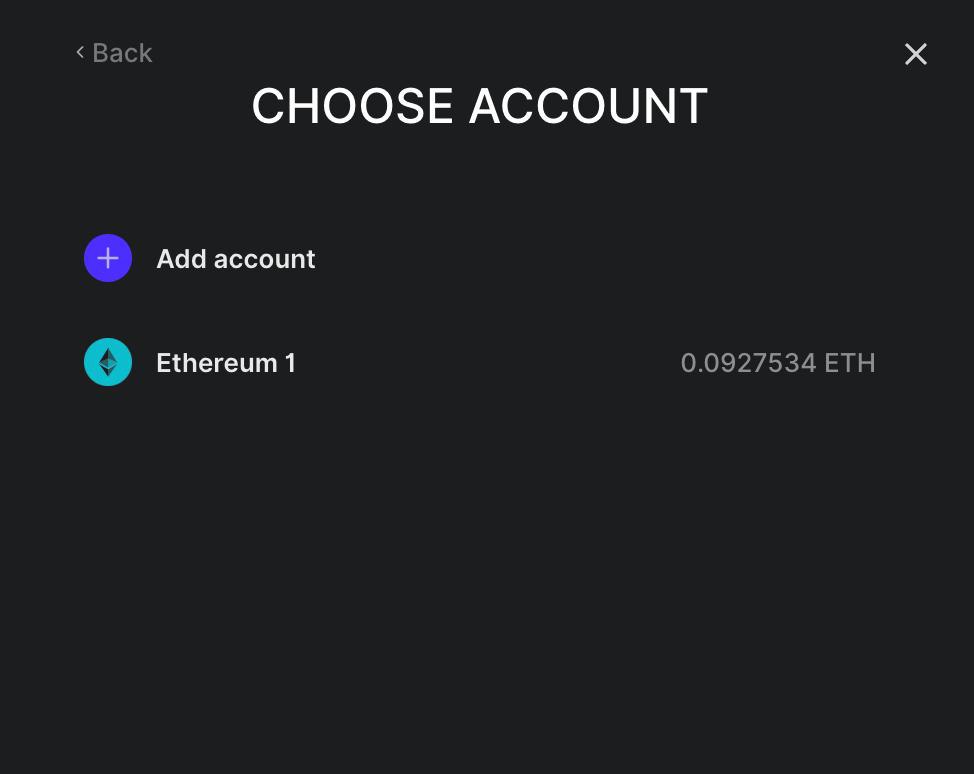
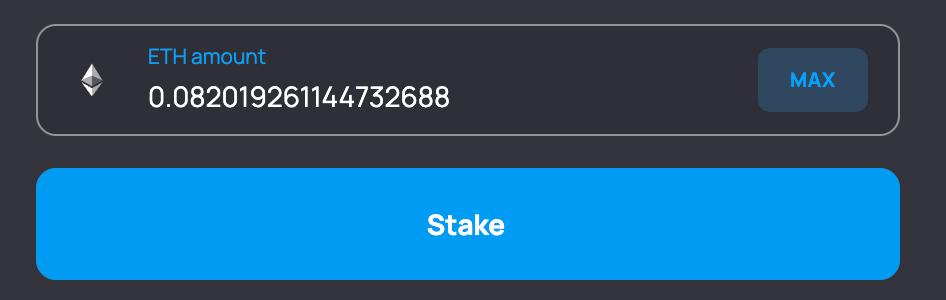
4. Select your account and amount of ETH to Stake
Once inside the app, choose which ledger account you want to use and how much ETH you want to stake. You need to stake a minimum of 32 ETH, the app will automatically assign your ETH to P2P.org’s validator infrastructure.
Choose the amount of ETH you want to stake.
5. Confirm the Transaction in Ledger Live
Ledger Live will guide you through the staking transaction. Double-check the details and follow the prompts.
Ledger Live will prompt you to confirm the staking transaction.
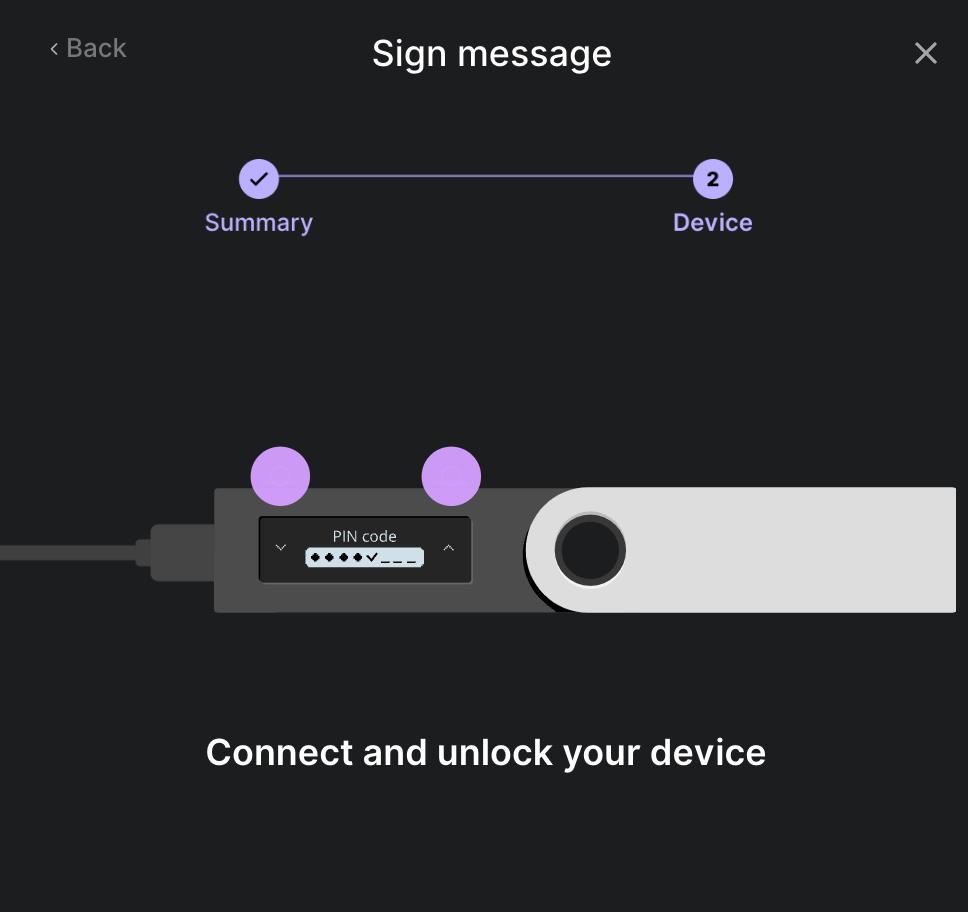
Your Ledger device will ask you to approve the staking transaction. This keeps everything secure and non-custodial.
6. You’re Now Staking ETH
That’s it. Your validator is now active and earning rewards. You can monitor your staking status directly inside Ledger Live.
FAQ
Is this liquid staking?
No. This is native Ethereum staking. Your ETH is locked into a validator, not represented by a token.
Who runs the validator?
P2P.org manages the infrastructure. You keep full custody through your Ledger device.
What about rewards?
Ethereum staking rewards are dynamic and protocol-driven. While rewards fluctuate based on network conditions, validator performance, and staking participation, they typically range between 3.5% - 4.5% annually as of mid-2025. P2P.org’s validators have consistently maintained high uptime and reliability, helping you capture the full share of on-chain rewards securely through your Ledger device.
Can I unstake?
Yes. Ethereum withdrawals are now live. You can initiate an exit and reclaim your ETH after the protocol-defined withdrawal queue.
Will I lose control of my ETH?
No. Your ETH stays in your self-custodied wallet. Ledger handles signing, and P2P.org runs the validator infrastructure, without ever having access to your funds.
Start Staking ETH Today
Ledger + P2P.org makes native ETH staking simple. If you’ve been holding ETH in cold storage, now’s the time to put it to work, without compromising on custody or security.
<p>It’s been about a month since the Unified API went live. No big announcement. No loud campaign. Just a quiet rollout of something we knew would solve a painful, structural problem: fragmented staking infrastructure across chains.</p><p>The Unified API replaces the patchwork of chain-specific staking integrations with a single, standardized interface. That means one integration that unlocks the complete staking flow across Ethereum (SSV), Solana, TON, Babylon, Avail and many more chains (over 20 in fact). </p><p>And critically, it’s already working in production offering staking at scale, with cleaner codebases, fewer edge cases, and dramatically reduced time-to-market for new network support.</p><h2 id="one-format-to-stake-them-all"><strong>One Format to Stake Them All</strong></h2><p>Historically, staking integrations have been a pain to maintain. </p><p>Each new network brings its own logic, signing requirements, and monitoring quirks. The result? High integration costs, inconsistent user experiences, and ongoing maintenance that scales linearly with the number of supported chains.</p><p>The Unified API breaks that pattern.</p><p>All networks supported via the API share the same structural request and response format. Stake Solana or Babylon, or Ethereum via SSV; it doesn’t matter. The staking flow is the same. Your backend logic stays clean. Your frontend doesn’t need to be rebuilt. Adding a new chain no longer means writing new infrastructure.</p><p>And since we abstract away the underlying validator infrastructure, your team can stay focused on user experience, while P2P.org ensures network-level performance and uptime.</p><h2 id="already-live-already-delivering"><strong>Already Live, Already Delivering</strong></h2><p>The past month has been proof that the Unified API is a production-grade infrastructure. Teams already using it have reported dramatic reductions in dev effort per chain, and faster rollout cycles for new staking products.</p><p>With built-in support for key networks and more coming, including up to 30 by Q3 2025, the Unified API is designed to scale as your ambitions grow. Whether you’re launching a new staking product or expanding an existing one, the integration effort remains the same: connect once, access everything.</p><p>We’re also continuing to refine what the API can do. Features like tracking the status of the staking position and audit history are already in development.</p><p>For developers, we've already shipped a new <a href="https://www.npmjs.com/package/@p2p-org/signer-sdk?ref=p2p.org" rel="noreferrer">Signer SDK</a>, providing transaction signing logic for all supported networks.</p><h2 id="built-for-real-world-teams"><strong>Built for Real-World Teams</strong></h2><p>This wasn’t designed as a theoretical abstraction. It was built in response to the operational friction our partners experienced over the years of scaling staking infrastructure.</p><p>The Unified API offers:</p><ul><li>A faster way to support multiple networks</li><li>A consistent staking UX across protocols</li><li>Less complexity for dev teams</li><li>A direct path to revenue for platforms offering staking-as-a-service<br></li></ul><p>It’s infrastructure, but opinionated. Lightweight, but extensible. And more importantly, it’s here, it’s working, and it’s growing.</p><h2 id="explore-the-unified-api"><strong>Explore the Unified API</strong></h2><p>If your team is working on a staking dashboard, DeFi aggregator, or wallet app, and you’re tired of managing five different staking SDKs, it’s time to streamline.</p><p>The Unified API is ready now. The question is: how many networks do you want to support this quarter?</p><p>→ <a href="https://docs.p2p.org/docs/contacts?utm_source=blog&utm_medium=post&utm_campaign=API+blog_10.07#/"><u>Request access or book a demo</u></a></p><p>→ <a href="https://docs.p2p.org/?utm_source=blog&utm_medium=post&utm_campaign=API+blog_10.07#/"><u>See documentation</u></a></p>
<p></p><h2 id="tldr"><strong>TL;DR</strong></h2><ul><li><em>P2P.org and Ton Whales have eliminated TON staking's whale-only problem by dropping minimum requirements from 300,000 TON (as of May 2025) to just 10 TON with unlimited user capacity.</em></li><li><em>Exchanges, wallets, and custody platforms can now integrate institutional-grade TON staking in under a week through widget, API, or dApp solutions that offer competitive network rewards.</em></li><li><em>This collaboration transforms TON from an inaccessible staking network into a scalable infrastructure that will accelerate mainstream adoption across the Telegram ecosystem.</em></li></ul><p>P2P.org and Ton Whales have launched a collaboration that eliminates the barriers that have kept institutional-grade TON staking locked away from most users and platforms.</p><p>This isn’t another incremental improvement, but a fundamental shift in TON staking. It expands access to a broader range of participants and broadens how intermediaries can offer services to their users.</p><h2 id="the-whale-problem-gets-solved"><strong>The Whale Problem Gets Solved</strong></h2><p>TON staking has had accessibility limitations since day one. Traditional pools demand minimums between 10,000-300,000 TON and cap delegator participation at 1-40 users. For context, that's like requiring $300,000-$2M just to unlock network rewards, then limiting each pool to fewer participants than a small company meeting.</p><p>The new smart contract infrastructure drops the minimum to 10 TON with unlimited delegator capacity. This represents a 35,000x reduction in the barrier to entry while removing capacity constraints entirely.</p><p>Thanks to a technical breakthrough — an auto-distribution mechanism of the TON network — users can now stake any amount of TON with just one delegation transaction in a TW pool. Unlike other pool types that require separate validator setups for every 2 million TON, TW pools streamline the process, making staking significantly more accessible and efficient.</p><h2 id="three-ways-to-bring-ton-staking-to-your-users"><strong>Three Ways to Bring TON Staking to Your Users</strong></h2><p>The collaboration offers intermediaries flexibility in how they implement TON staking:</p><p><strong>Widget Integration</strong>: Drop-in component for existing interfaces, deployable in under a week. This approach prioritizes speed over customization, ideal for platforms wanting to add staking functionality without extensive development.</p><p><strong>Unified API</strong>: Complete backend infrastructure with full frontend control. Platforms can build custom user experiences while leveraging proven staking operations and validator relationships.</p><p><strong>dApp Solution</strong>: Ready-to-deploy staking interface that can be white-labeled or integrated independently. This works well for organizations wanting comprehensive staking capabilities with minimal internal development.</p><p>All three options share the same foundational infrastructure: automatic validator distribution, 24/7 monitoring, and transparent network reward sharing.</p><h2 id="why-this-collaboration-works"><strong>Why This Collaboration Works</strong></h2><p>P2P.org brings institutional-grade infrastructure to TON staking, while Ton Whales contributes deep protocol-native expertise. Together, we provide staking architecture that improves on prior solutions in meaningful ways, particularly for platforms with operational and scalability requirements.</p><p>Compared to the original Ton Whales contract — which requires a minimum of 50 TON and is widely used in the retail ecosystem — this new integration supports a dramatically lower entry point of just 10 TON, expanding access for users and enabling platform partners to reach a wider base.</p><p>Additionally, this is the only TON staking solution that has undergone dual audits (Quantstamp and Trail of Bits), addressing institutional requirements that are typically non-negotiable in enterprise adoption.</p><p>P2P.org’s infrastructure — already trusted with over $10 billion in delegated assets across 90,000+ delegators — includes 24/7 monitoring, non-custodial architecture, and transparent reward accounting, making it the first and only institutional-grade staking solution available for the TON ecosystem.</p><h2 id="audit-proven-audited-always-on"><strong>Audit-Proven. Audited. Always On.</strong></h2><p>Smart contract failures in DeFi can destroy platforms and user funds. The security approach of our solution reflects institutional requirements rather than typical DeFi standards.</p><p>Quantstamp and Trail of Bits conducted independent audits, specifically focusing on TON's FunC programming language. This specialization matters because TON's unique architecture requires auditors familiar with its specific technical characteristics.</p><p>P2P.org is introducing a 24/7 monitoring infrastructure, which provides proactive support that prevents problems rather than reacting to them.</p><p>The non-custodial architecture ensures intermediaries never take custody of user funds, reducing complexity while preserving user control throughout the staking process.</p><h2 id="business-model-without-custody"><strong>Business Model Without Custody</strong></h2><p>The operational structure creates network reward streams for intermediaries without requiring custody or significant operational overhead. Platforms can monetize the distribution of network rewards from user stakes while maintaining clean operational positioning.</p><p>With unlimited capacity and 10 TON minimums, nearly every TON network participant can stake their TONcoin compared to previously just whale accounts. The business model scales with platform growth rather than hitting artificial capacity constraints.</p><p>For institutional clients, the ability to stake vested tokens addresses a specific pain point where significant TON holdings were previously non-productive during lock-up periods.*<em>(*This offer is made solely on the basis of a binding agreement with P2P and does not, by default, apply to all participants staking on the TON network.)</em></p><h2 id="data-transparency-sets-new-standards"><strong>Data Transparency Sets New Standards</strong></h2><p>A significant innovation is granular data visibility for individual delegators. Previously, TON staking participants often operated without clear visibility into their exact stake amounts and reward calculations.</p><p>The new infrastructure provides precise, real-time information for each delegator—the kind of transparency that institutional clients require but has been impossible to deliver until now. This addresses a common friction point in enterprise adoption where detailed reporting and accountability are non-negotiable.</p><h2 id="ecosystem-development-and-future-roadmap"><strong>Ecosystem Development and Future Roadmap</strong></h2><p>Beyond immediate staking infrastructure, the collaboration includes several forward-looking components that extend TON's utility:</p><p><strong>Enhanced Dashboard</strong>: Real-time staking insights, reward tracking, and an intuitive interface designed for both retail and institutional users.</p><p><strong>Crypto Card Integration</strong>: Ton Whales is developing a non-custodial bank card with integrated staking functionality, allowing users to be eligible for staking rewards while making everyday purchases — a bridge between traditional finance and TON's decentralized ecosystem.</p><h2 id="market-timing-and-competitive-dynamics"><strong>Market Timing and Competitive Dynamics</strong></h2><p>Several factors create a unique opportunity window for TON staking infrastructure. TON's connection to Telegram's user base provides adoption potential that most blockchains lack. As Telegram continues integrating blockchain features, demand for accessible staking infrastructure will likely accelerate.</p><p>Enterprise clients increasingly expect reward-generating options for digital assets. Platforms that can offer institutional-grade staking can now achieve competitive advantages in client retention and acquisition, particularly as traditional finance and DeFi continue converging.</p><p>Early infrastructure providers typically capture disproportionate market share. The platforms that integrated Bitcoin early, added Ethereum staking first, or offered DeFi reward farming ahead of competitors built lasting advantages that persist years later.</p><h2 id="implementation-timeline-and-business-impact"><strong>Implementation Timeline and Business Impact</strong></h2><p>The infrastructure is already live and has been successfully audited by Quantstamp and Trail of Bits. Integration timelines vary by approach—widget implementations are possible within one week, while more complex API integrations typically require 2-4 weeks, depending on platform-specific requirements.</p><p>For platforms, this represents more than just adding another feature. Its infrastructure can increase user retention (users that are eligible for rewards from the network are less likely to leave), enable intermediaries to open up new network reward streams, and differentiate from competitors still struggling with traditional staking limitations.</p><p>The unlimited capacity removes traditional constraints on network reward potential. Instead of being limited by pool capacity or minimum stake requirements, platforms can benefit from their entire user base's staking activity.</p><h2 id="industry-context-and-broader-implications"><strong>Industry Context and Broader Implications</strong></h2><p>This collaboration represents infrastructure development that could influence TON's broader adoption trajectory. By removing technical and operational barriers that have limited staking accessibility, it addresses fundamental constraints on network growth.</p><p>By combining proven institutional operations with specialized technical expertise, there is now a template for how mature staking infrastructure can be developed efficiently rather than building everything from scratch.</p><p>For the TON ecosystem specifically, increased staking participation strengthens network security while reducing token velocity, both positive factors for long-term network stability and growth.</p><p>With TON Foundation support, this collaboration aims to accelerate overall staking adoption and DeFi growth across the TON ecosystem, potentially positioning TON as a more accessible alternative to other blockchain networks with higher technical barriers.<br></p><div class="kg-card kg-button-card kg-align-center"><a href="https://www.p2p.org/networks/ton?ref=p2p.org" class="kg-btn kg-btn-accent">Stake TON with P2P.org</a></div><h2 id="about-ton-whales"><strong>About Ton Whales</strong></h2><p>Ton Whales is a key development team in the TON ecosystem, specializing in smart contracts, applications, and infrastructure. Their open-sourced staking contract is the go-to choice in the TON community thanks to its ease of use, security, and transparency. Ton Whales is committed to expanding and decentralizing TON, delivering innovative products that bring blockchain technology to a wider audience.</p><p><em>The information provided above is for informational purposes only and should not be construed as, or relied upon as, investment, financial, or any other type of professional advice. P2P.org or any associated parties do not offer any form of advisory services, and nothing shared here should be considered as a recommendation or endorsement for any financial decisions. P2P.org is not responsible for any decisions made based on the information provided. You are encouraged to consult with a qualified financial advisor or professional before making any investment or financial decisions. Rewards are estimated and not guaranteed. Past performance is no guarantee of future results. </em></p>
 ALL
Agoric
Aptos
Auth
Avail
Avalanche
Axelar
Babylon
Bitcoin
bouldertech
BTC
capital flow
Cardano
Celestia
certifications
Chainlink
compliance
Cosmos
Crescent
curator
Cyberway
DAOBet
Data stream
DeFi
defi dispatch
defi infrastrcuture
defi infrastructure
defi news
defi vault
due diligence
DVT
Dymension
Economy
Education
EigenLayer
Elrond
employee
employee advocacy
employee interviews
ETF
Ethereum
Evmos
exit queue
Explain Like I'm Five
Governance
Guide
hedge fund
how to
HR
HUB series
Hyperliquid
infrastructure
institutional lens
institutional staking
ISO 27001
ISO/IEC 27001:2022
Issuer
Kava
Kusama
landing
latin america
legal layer
legislation
Lido
liquid staking
LSP
Manta
Mantle
Marlin
Matic
MEV
MiCA
Moonbeam
MultiversX
Near
Networks
News
NuCypher
Oasis
Obol
Origin
P2P Verified
Partnership
pectra
Persistence
playbook
Pocket
Polkadot
Polygon
product
products
Quicksilver
Regen
regulation
ALL
Agoric
Aptos
Auth
Avail
Avalanche
Axelar
Babylon
Bitcoin
bouldertech
BTC
capital flow
Cardano
Celestia
certifications
Chainlink
compliance
Cosmos
Crescent
curator
Cyberway
DAOBet
Data stream
DeFi
defi dispatch
defi infrastrcuture
defi infrastructure
defi news
defi vault
due diligence
DVT
Dymension
Economy
Education
EigenLayer
Elrond
employee
employee advocacy
employee interviews
ETF
Ethereum
Evmos
exit queue
Explain Like I'm Five
Governance
Guide
hedge fund
how to
HR
HUB series
Hyperliquid
infrastructure
institutional lens
institutional staking
ISO 27001
ISO/IEC 27001:2022
Issuer
Kava
Kusama
landing
latin america
legal layer
legislation
Lido
liquid staking
LSP
Manta
Mantle
Marlin
Matic
MEV
MiCA
Moonbeam
MultiversX
Near
Networks
News
NuCypher
Oasis
Obol
Origin
P2P Verified
Partnership
pectra
Persistence
playbook
Pocket
Polkadot
Polygon
product
products
Quicksilver
Regen
regulation